
 Special Offers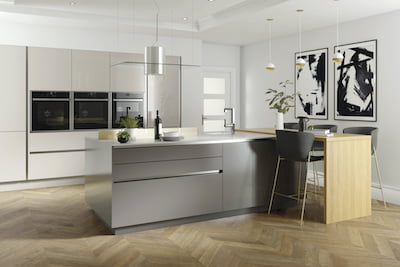


Galley kitchens are typically long and narrow with a row of cabinets down just one side of the room, or both sides. So designing this space effectively is crucial for the practicality, and aesthetic appeal of your kitchen. But how can you be sure to create a galley kitchen that meets both of these requirements? Well, here at Homematas, we are Preston’s leading kitchen design experts, and this is our guide to how to design a galley kitchen.
How to design a galley kitchen
There are a number of factors to consider to get the most out of your galley kitchen space. These include:
- Plan for efficient workflow: The starting point in designing a galley kitchen is understanding how you move through the space. The “kitchen work triangle”, the relationship between the sink, cooker, and refrigerator, remains a useful guideline. In a galley layout, these elements should be positioned to reduce walking distance and avoid congestion. One common approach is to keep the sink and cooker on one side, with the fridge on the opposite run. This ensures an intuitive flow between food preparation, cooking, and cleaning.
- Maximise natural light and space perception: Galley kitchens can sometimes feel narrow or enclosed, so it’s important to enhance the sense of space. Where possible, introduce natural light through a window, skylight, or glazed door. Pale colours, reflective finishes, and minimal visual clutter help to create an airy feel. Consider handleless cabinetry and integrated appliances for a sleek, continuous look. Open shelving on one side can also reduce visual weight and make the room appear wider.
- Optimise storage and organisation: Efficient storage is crucial in a galley kitchen. Tall cabinets that extend to the ceiling make use of vertical space and provide room for infrequently used items. Pull-out larders, corner carousels, and deep drawers improve accessibility and reduce wasted space. Thoughtful internal organisation, such as drawer dividers and integrated bins, helps maintain order and supports an uncluttered worktop.
- Choose durable, functional materials: Because galley kitchens concentrate activity in a compact area, surfaces must be durable and easy to clean. High-quality laminate, quartz, or solid-surface worktops provide both resilience and style. Flooring should be hard-wearing and non-slip; options such as porcelain tiles or luxury vinyl work well in this context. Consistency in materials across both runs can make the space feel cohesive, while a contrasting splashback or accent colour can add character without overwhelming the room.
- Consider safety and accessibility: A narrow kitchen requires careful attention to spacing. Allow at least one metre between opposing runs to ensure comfortable movement. Avoid placing appliances directly opposite each other, especially those with doors that open outward. For accessibility, choose drawers over cupboards, position frequently used items within easy reach, and consider soft-close mechanisms for a quieter experience.
Why not take a look at our range of fitted kitchens today, here at Homematas?